The Causse Between
Km 14-22: Across the causse corrézien to Collonges-la-Rouge
Standings
See full standings ↓Elevation Profile
Scroll to zoom, drag to pan. Double-click to reset.
Power Stats
Reference: 70kg rider + 8kg bike, CdA 0.35, Crr 0.005
Estimated Time
The Causse Between
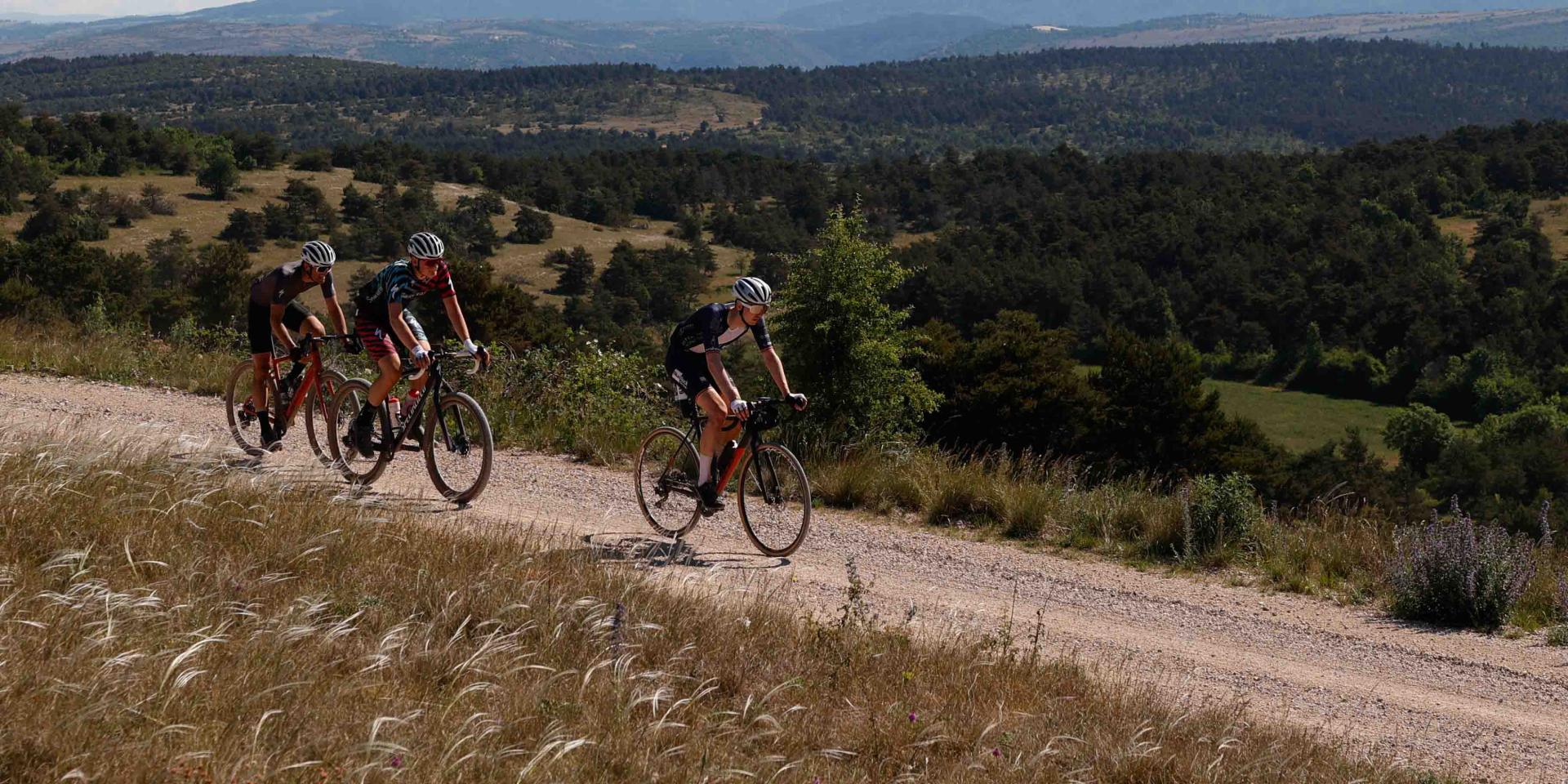
The castle shrinks behind a shoulder of hill within the first kilometre, and for the rest of the day it will be a thing remembered rather than seen. Turenne stood on a Jurassic butte témoin, a witness hill left in place when the softer marls around it wore down, which is a geologist's way of saying the two towers rode out the Tertiary on a raft of limestone while the rest of the region was emptied into the Dordogne.
The road east of the village rises for about five kilometres through sheep country, crests a ridge at two hundred and eighty-seven metres around km twenty, and then begins a gentle, deceiving drop toward a village the cyclist has not yet seen. This is the causse corrézien, the dry limestone plateau that runs north from the Causse de Martel and stops, more or less abruptly, against the Meyssac fault. The fault itself is invisible to the traveller but almost comically clean on a geological map. To the west of it lie the sediments and the sheep; to the east, the crystalline rocks of the Massif Central begin. Turenne, in other words, was the last castle on one continent before the next one started, which is the kind of detail a medieval viscount would have understood without needing to name it.
A mustard, a marshal

One ought to say goodbye to Turenne with something more than just a view. A reader stocking a mental larder might take the mustard. Clement VI, born at Rosiers d'Égletons an hour up the road, became pope at Avignon in 1342 and, homesick for a particular condiment, is said to have summoned a Corrèzien moutardier to the papal court. The tradition names the man a Turennois and gives him the title Grand Moutardier du Pape. Maison Denoix, founded in Brive in 1839 and still standing,1 makes the moutarde violette to this day, a mustard the colour of a bruise, coloured by grape must rather than dye,2 and traditionally eaten with a slice of boudin.

Ten kilometres from the castle, a distillery goes on doing for tourists and for residents what is claimed to have been done in the fourteenth century for a pope.

One ought also to say goodbye to Turenne's greatest son, who already left it. Henri de La Tour d'Auvergne, Marshal of France, was born inside those walls in 1611, converted from Protestantism at the age of fifty-seven, and was killed instantly at Sasbach in July 1675 by a stray cannonball while riding forward to reconnoitre the lines of his friendly rival Montecuccoli. His men, the story runs, opened his eyes twice and then closed them for good. Montecuccoli, hearing the news, produced the only line about a dead enemy worth keeping: that today there had died a man who did honour to mankind.3 The body was given a place at Saint-Denis among the kings of France, moved discreetly to the Jardin des Plantes during the Revolution to keep it from the tumbrels, and carried at last, in September 1800, to the Invalides, where it has remained. Even the castle's greatest ghost is elsewhere, and so is the cyclist, by now, and so are we.
The causse itself
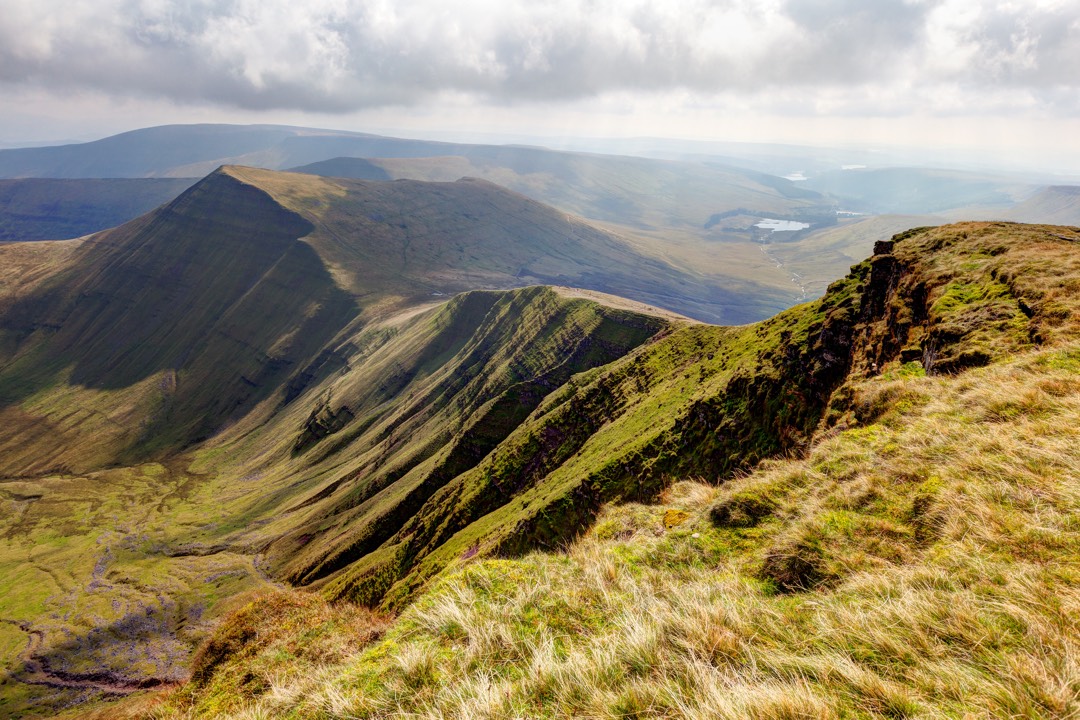
The road crosses a landscape that has been dry for a very long time. Limestone pavement shows through the grass where sheep have cropped it hardest. The walls are drystone, and the fields they enclose are smaller than the ones the peloton crossed after Brive, because stone fields, unlike walnut fields, remember every generation that farmed them. At the foot of Turenne there is a famous scatter of fossil scallop shells, a small cimetière de coquilles Saint-Jacques laid down when the Corrèze was a warm sea, which it will not be again until some other geology takes over. Two hundred and eighty-seven metres is the highest ground the stage has crossed so far. The cyclist crosses it without comment.
Vines below, walnuts ahead

To the south the ground falls away toward Queyssac les Vignes and Branceilles, and with it the causse lets in the light of a different country. This is vin paillé country, a tiny AOC since 2017, straw wine made by drying the grapes for weeks on racks until they concede their water and keep their sugar. Some eighteen producers make perhaps fourteen thousand bottles a year,4 which is barely a gesture at the scale of French viticulture and exactly the right gesture for a department that lost its vineyards to phylloxera around 1880 and only began replanting, with deliberate stubbornness, in the 1980s. The cooperative at Branceilles, which took a bronze at the 1878 Paris exposition weeks before the disease arrived, replanted in 1986 and, in time, named itself Mille et Une Pierres for the white stones in its clay.5 These are the details one retains: not the vintage, but the stubbornness.
There is also the vin de noix, which belongs to the other larder. The rule is the rule of forties: four litres of wine, one of eau-de-vie, forty green walnuts quartered, forty cubes of sugar, forty days. The walnuts must be cut at midsummer, while the shell is still soft enough that a kitchen knife goes through the whole nut like an apple. The fingers that quarter them will be black for a week, because the husk of a green walnut was once the cheap iodine of the Corrèze and the staining is what the iodine did. A jar of the stuff macerating on a kitchen windowsill on the Saint-Jean is less a recipe than an almanac; it tells the household, and whoever is passing, where it stands in the year.
The cyclist, now crossing the ridge at its most modest, can see no vines and no walnuts. What the cyclist sees, a kilometre ahead, is a cluster of roofs the wrong colour for limestone.
Those roofs are Collonges-la-Rouge. The route clips the edge of the village at the very end of this segment, just long enough to register the red sandstone — iron oxide in the local grès, the same stuff that colours the soil after rain — before the road bends east and carries on. In July the peloton will pass through here at fifty kilometres an hour, which is time enough to notice the colour and nothing else. The carved tympanum, the Maison de la Sirène, the story of how a village mayor invented the Plus Beaux Villages de France — all of it will be behind them before the television cameras have finished panning. Some places are seen; Collonges, from a bicycle at speed, is only glimpsed.
Footnotes
- Maison Denoix, https://www.denoix.com/en/violet-mustard ↩
- A Gardener's Table on making purple mustard from grape must, https://agardenerstable.com/purple-mustard-from-homemade-must/ ↩
- Musée virtuel du Protestantisme, https://museeprotestant.org/en/notice/turenne-1611-1675-2/ ↩
- Brive Tourisme, https://en.brive-tourisme.com/fr/gastronomie/produits-locaux/vins-bieres-spiritueux/vin-paille/ ↩
- The actual rename was in 2019. See https://www.1001-pierres.com/notre-histoire ↩
Gallery
Le château de la Rue, Ligneyrac, Corrèze, France.
Photo by Père Igor · CC BY-SA 4.0 · Source
Portrait of Henri de la Tour d'Auvergne, Vicomte de Turenne (1611–1675), as Marshall of France on horseback
Photo by Circle of Charles Le Brun · Public domain · Source
Collonges-la-Rouge (Corrèze). Rue de la Barrière.
Photo by Daniel Jolivet · CC BY 2.0 · Source
Collonges-la-Rouge (Corrèze) La porte Plate ou porte de la ville ou, à partir du XVIIIe siècle, porte de la Halle. D'après madame Guely, conférencière, la porte pourrait être "plate" pa
Photo by Daniel Jolivet · CC BY 2.0 · Source
Nearby Attractions
Late 16th-century fortified manor in Collonges-la-Rouge with distinctive turrets and loopholes.
Workshop-museum in Collonges-la-Rouge demonstrating traditional Correze trades: woodworking, basketry, and stone carving.
11th-century fortified church in Collonges-la-Rouge with carved Romanesque tympanum depicting the Ascension.
16th-century house with sculpted mermaid in Collonges. Once belonged to Henry de Jouvenel, husband of Colette.
Discovery centre at Noailhac interpreting the Meyssac geological fault. Nine illustrated panels, fossils, rock samples, and a scale model. Free admission.
Neolithic collective burial in Noailhac commune; supporting slabs remain, covering disappeared. On the Sentier des Dolmens hiking trail. Excavations from 1865.
Weather on April 12, 2026
Rider Standings
as of April 11, 2026
| Stat | Justin | Marian | Nan | Wally |
|---|---|---|---|---|
| Total (capped) | 22 km | 22 km | 22 km | 15.6 km |
| Daily avg (actual) | 4.42 km | 2.17 km | 3.29 km | 1.42 km |
| Daily avg (capped) | 2 km | 2 km | 2 km | 1.42 km |
| Longest day | 7.9 km | 3.5 km | 5 km | 2.5 km |
| Best 3-day | 16.6 km | 8.5 km | 11.9 km | 5.3 km |
| Recent 5-day avg | 4.9 km | 2.48 km | 3.3 km | 1.42 km |
| Days <3km | 4 | 9 | 4 | 11 |
| Sprint pts | 18 | 19 | 25 | 1 |
| Climb pts | 1 | 0 | 2 | 0 |
| Remaining | 163 km | 163 km | 163 km | 169.4 km |
| Est. finish | Jul3 | Jul3 | Jul3 | Aug10 |